Upcoming professional learning
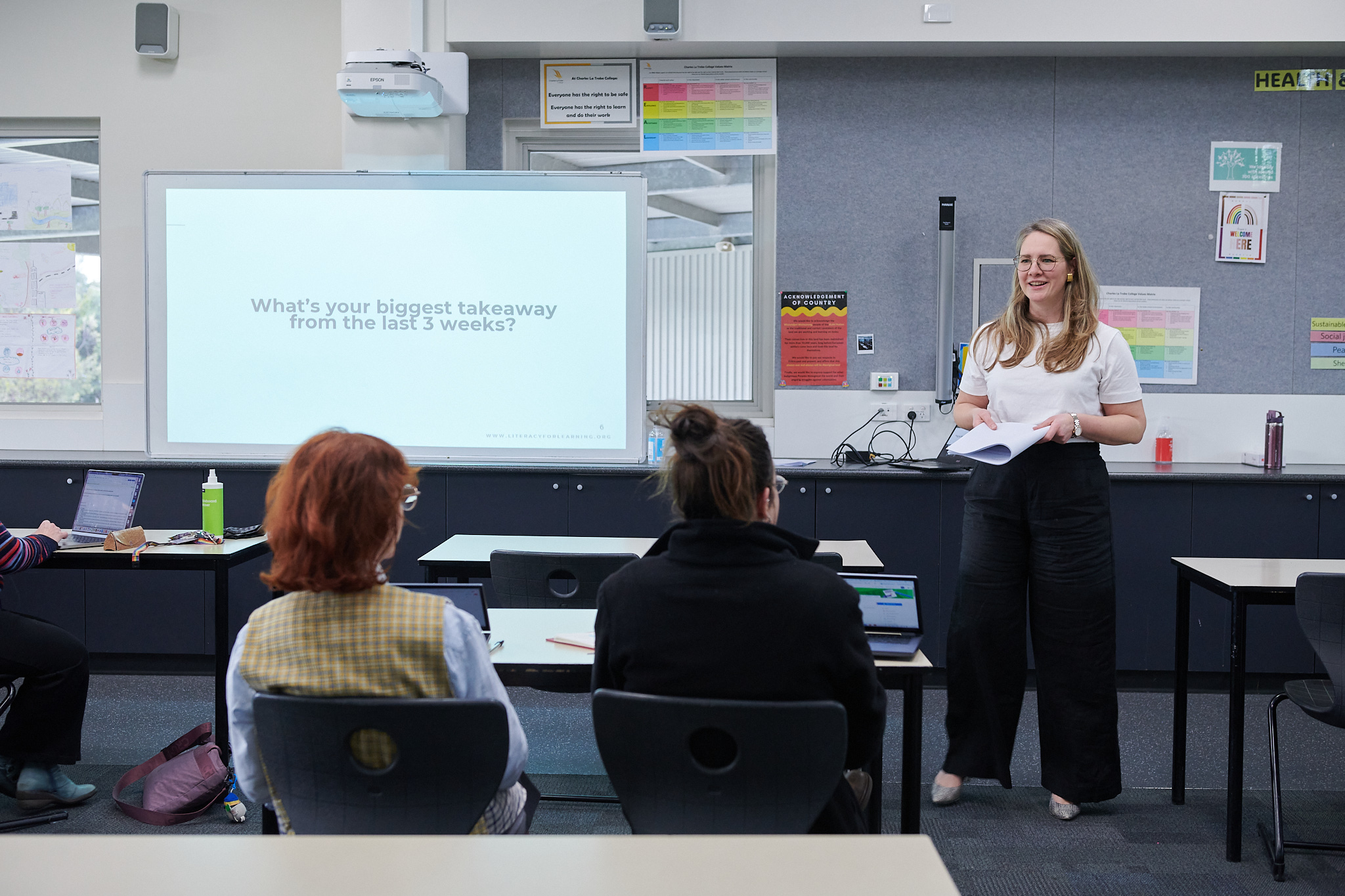
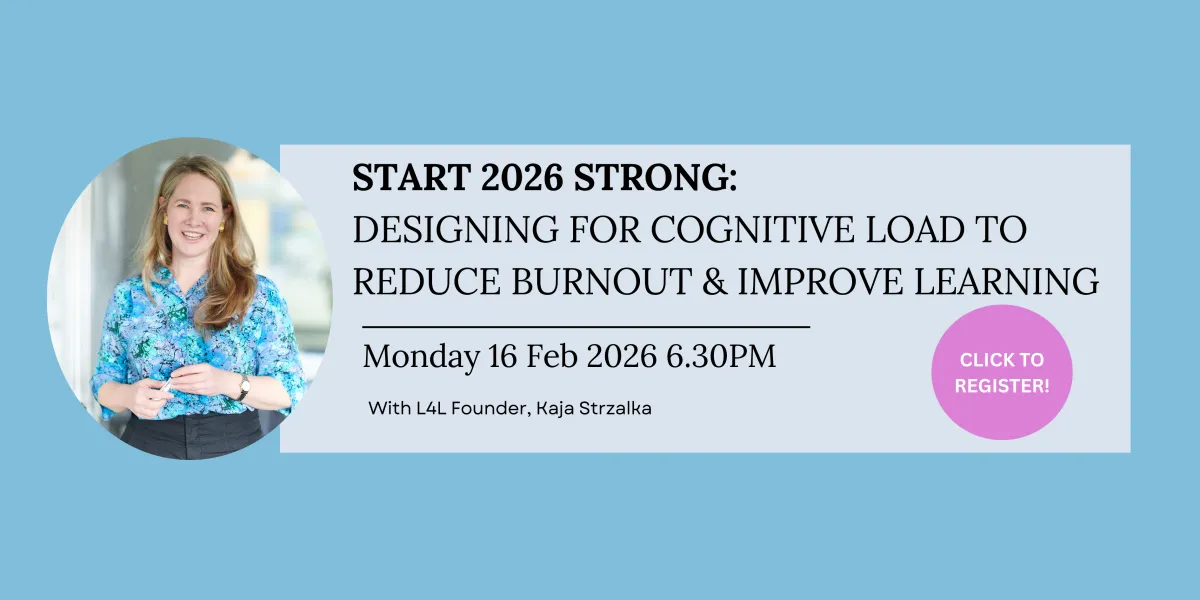
Our professional learning supports teachers to apply the science of learning in real classrooms.
About
Literacy for Learning
About
Literacy for Learning
Literacy for Learning (L4L) is a teacher-designed method for applying the science of learning to real classrooms—through integrated reading, writing, and knowledge instruction.
Our name reflects our belief that literacy exists to support learning, with reading and writing used to build knowledge and thinking rather than taught as isolated ends in themselves.
Created by teachers, for teachers, L4L bridges the gap between cognitive science and day-to-day classroom practice. It offers a clear, structured approach to unit and lesson design, helping teachers apply principles such as working memory, cognitive load, and knowledge-building without adding complexity or competing priorities.
Literacy for Learning (L4L) is a teacher-designed method for applying the science of learning to real classrooms—through integrated reading, writing, and knowledge instruction.
Our name reflects our belief that literacy exists to support learning, with reading and writing used to build knowledge and thinking rather than taught as isolated ends in themselves.
Created by teachers, for teachers, L4L bridges the gap between cognitive science and day-to-day classroom practice. It offers a clear, structured approach to unit and lesson design, helping teachers apply principles such as working memory, cognitive load, and knowledge-building without adding complexity or competing priorities.
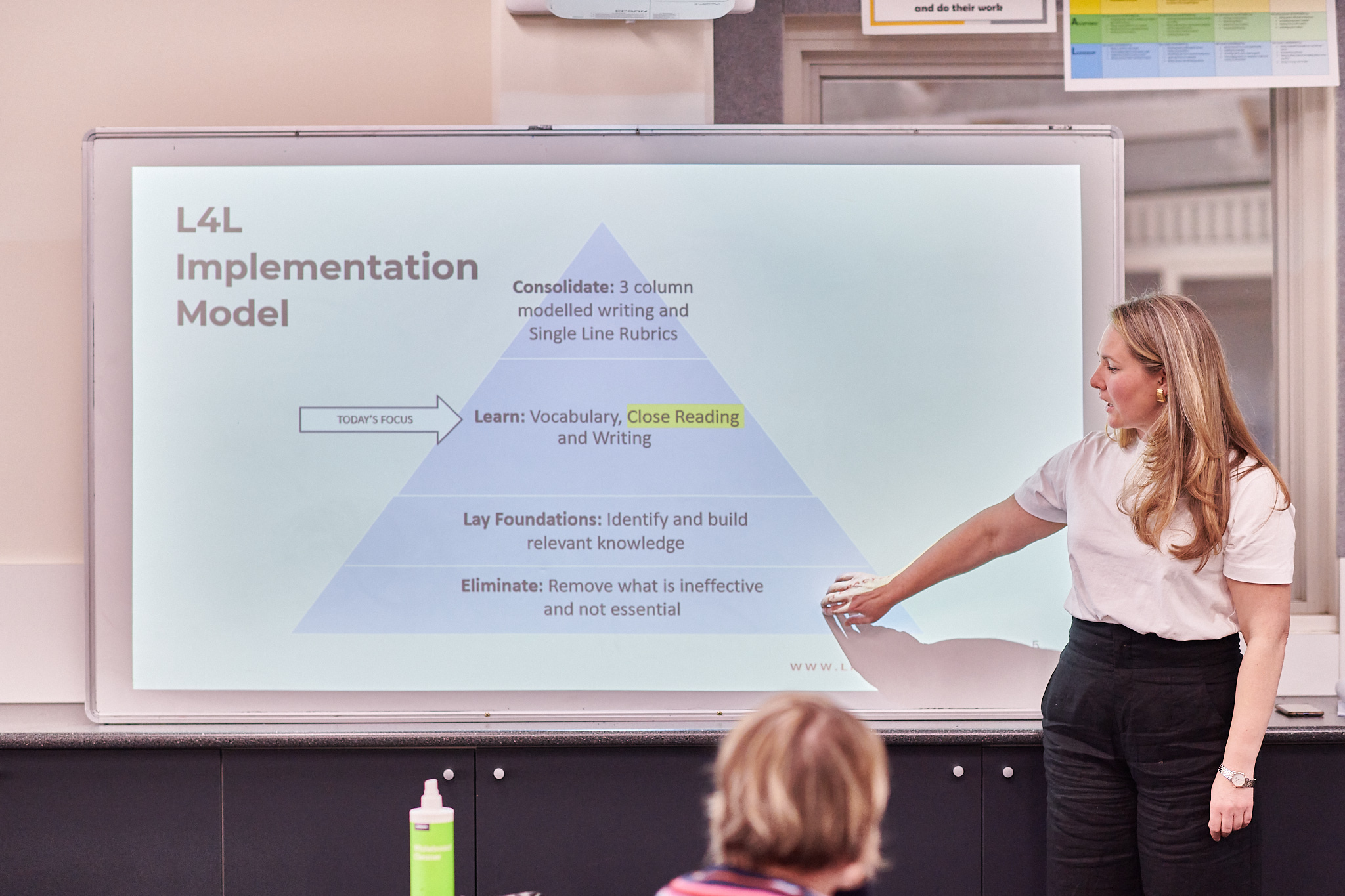
At the heart of the L4L Method is the belief that reading, writing, and content should not be taught in isolation. Instead, they work together as one integrated process, with literacy taught in the service of thinking. This removes the need for separate literacy blocks or disconnected strategies, saving time while increasing instructional impact.
L4L was designed from a secondary classroom perspective, where teachers juggle complex texts, content-heavy curricula, and diverse student needs across subjects. While the method was designed specifically for secondary classrooms, where reading, writing, and thinking need to work together, L4L also supports primary teachers ready to move beyond siloed literacy instruction toward more integrated, knowledge-rich learning.
Grounded in research and shaped by classroom realities, L4L provides a flexible, all-in-one foundation for planning and teaching. It doesn’t replace professional judgement or limit teacher expertise; it strengthens it. Teachers remain the drivers of learning, using the method to design rigorous, equitable, and sustainable instruction that works across contexts.
L4L doesn’t dismiss the value of individual strategies or one-off professional learning. Instead, it offers a unifying framework—one method you can return to again and again—to reduce decision fatigue, plan with confidence, and support lasting learning for students.